Mostrando entradas con la etiqueta ICT. Mostrar todas las entradas

4/07/2017

WEEK 9 AT EOI ELX

 Hello, my readers!

Monday 3rd, April

Room 3. C1 with Klara Seheult. Class management: her class furniture was organised as a horseshoe, the same I observed in Ramón's classroom (15). They always start the day with several monologues on a specific topic provided by the teacher a couple of days before, and prepared by ss. in advance at home. Then, they perform it in front of their fellows. At advanced level, ss. use different textbooks from different publishing houses. Remember that the whole school employed Oxford's New English File, while C1 is using Speak Out Advanced (Pearson), and C2 is following Keynote Proficient (CENGAGE Learning).

Peer-review. My master's mate, Begoña Lavale was teaching today. Her challenge was introducing unit 4 to ss. which deals with justice and crimes. First, she used two questions form the text book (p. 44) as a warming-up that they had to debate in pairs. Second, she sent homework (reading and questions). Finally, she used a TED Talks video in order to develop her lesson plan. The video was played twice and ss. were given a worksheet containing 5 listening comprehension activities (collocations, gaps, questions, definitions, proposed composition). All together they went through the worksheet. 

After she had finished her teaching, Klara continued as a class guide with some exercises about future tenses they had begun last week. Their finishing routing is being rearranged in small groups and answer the questions projected on the screen (Klara prepares a PPT presentation and uploades it to Edmodo) about the series they are watching: "The Night Manager".


At the very end of the session, ss. left and Klara and I gave some positive feedback to Begoña and discussed about C1 level advantages and disavantages.

PC ROOM & Doubts. Asking Inés for the PGA document (Programación General Anual) so to include information about it in my Practicum II. Of course, she told me I was not able to keep a copy but only having a look at it meanwhile I was at school. Also today, I was talking to Klara and María Tarí (Didactic Coordinator) at the English Department because I needed to clarify their roles within the dept. 


Tuesday 4th, April

I was working at the PC ROOM upstairs.


Wednesday 5th, April

Peer-review. Room 10. I attended a B2.2 level group tutored by Inés, in which my masters colleague Rocío Soriano was teaching. Her teaching unit was being developed during this week and she knew about the students before because she had been observing Inés' teaching for several weeks so far. 

Rocío started the session with a fashionable game, Kahoot! And the six questions ss. were requiered to answer dealt with a grammar point she had previoously explained on Monday: gerunds and infinitives. After this warming-up, ss. were arranged in pairs in order to prepare a four-minutes monologue and perform it. When they finished, they had to give some feedback to their couples, at the same time that Inés, Rocío, and myself were walking around to monitor their speaking and pronunciation errors.  To conclude, ss. worked the textbook (pages 76 & 77): listenings about health related to infographies, similes (animals), and phonetics /ə /. 

Afterwards, Inés gave some  feedback to Rocío. I also had a brief meeting with my tutor, Roge, and I went to the PC ROOM so to continue updating the blog, sharing interesting articles on my professional Twitter account and also, writing on my Practicum II (internship report).

Thursday 6th, April
I have been working on didactic resources, surfing the EOI website, and so on during the whole morning.

Friday 7th, April

Today was the last day at EOI in Elx, and we had a special staff meeting called in Spanish CLAUSTRO, which joined the whole school, that is to say all the teachers from every single language department. It was held at the school library, where I could discover some time ago a huge variety of books.

Nowadays, there are six languages taught at this school, therefore six different departments: Arabic, English, French, German, Italian, and Valencian. The current management team is shaped by six members, and the headmaster (Ramón Antón) was the responsible for setting the agenda and guiding the meeting.

  • Approval of the previous minutes /
    Aprobación del acta anterior
  • Facilities: Damages and Investments / 
    Daños y arreglos de infraestructuras
  • Collaboration Agreement with UMH / 
    Colaboración Practicum UMH (Universidad Miguel Hernández)
  • Plan Integral de Aprendizaje de Lenguas para el Profesorado
  • PGA Monitoring and Assessment /
    Valoración del seguimiento de la PGA (Programación General Anual)
  • Motions and queries / 
    Ruegos, preguntas, propuestas, etc.


Miss Bacaicoa

3/24/2017

WEEK 7 AT EOI ELX


Hello, my readers!


Monday 20th, March

On Monday I was busy upstairs preparing my lesson plan and so on.

Tuesday 21st, March

Group 09B (B2.2):
Room 15. This is the only group that Ramón Antón, EOI headmaster, teaches during this academic year. I was observing this class for my very first time and here is what it happened. My master's colleague Begoña Lavale is mentored by Ramón and so, part of today's teaching was carried out by her.


Group 11B: 
My lesson plan (16/24 SS.) / DAY 1 (2h) / Pages 98-
First of all, I had planned several warming-up questions to ask to my ss. about their sports habits. For instance: 

  • Do you do any sport?
  • How do you feel afterwards?
  • How many times a week?
  • Do you prefer to do it indoors or outdoors?

As they had already met me, we connected pretty much and a nice speaking time was shared about their experiencies beyond the classroom. Also, to contrast their personal opinions to someone else's, I asked for a volunteer to read the quotation by Stuart Heritage, a British journalist (p. 98):


"Runners run because they like running, joggers jog because they like cake." 

I wanted to lead them to a brief debate on motivation and activate their previous knowledge.

Then, I guided them to focus on the lesson's title: "A good sport" and we discussed together about its meaning (a person who is cheerful and pleasant, especially in a difficult situation). 


Taking into account only the headlines of the text "Battle of Workouts", we could practise pronunciation of the most fashionable sports nowadays: circuits, pilates, spinning, squash, step, tennis, weights, and yoga.

Without reading, just looking at the pictures and ss. tried to guess whether the statements from activity b) on page 99 were true or false. The results were highly positive in general terms.

The second part of my session was dedicated to grammar. As I decided to approach to it deductively, I told my ss. to explain what they alredy knew about relative clauses in English and complete the exercise a) on page 100. After 5 minutes of individual thinking and a couple of them more of pair "cheating" (comparison in couples), we checked it aloud and I taught them further. The following aspects had never been introduce at B2.2 level, so they were complete new for them:

  • WHICH to refer to a whole preceding clause, adding more information.
  • Quantifiers, numbers, superlatives + OF + Which / whom / whose [NON-DEFINING RELATIVE CLAUSES]4
  • WHAT used as a relative pronoun to mean 'the thing' or 'things which'.
We read together the examples on page 159 and activities a) and b) were mandatory homework for next day with me. 

The closing activity was aimed at improving their writing, patience, and promote their creativity. In order to have everything prepared in advance, I went to the classroom much earlier than ss. and moved the tables in groups of four. Furthermore, I had printed six famous paintings the day before and I left them in the middle of each team with a post-it on them with two relative pronouns. 

Ss. had to make up a story about the painting and introduce it to the audience as if they were guides in a museum. I took us between 15 and 20 minutes and they created really good stories.  

These were the pictures I gave them, all of them taken from Creative Commons:


To conclude, I let 5 minutes left for doubts.

Thursday 23rd, March

After greeting my ss., we started the session correcting the exercises they had as homework about relative clauses and completing the article (a) on the worksheet I photocopied and handed in as an extra practice paper (p. 181 from the Teacher's book). 

On the one hand, we worked on word building: adjectives - nouns - verbs related to sports and health on page 99, activities a, b, and c.

On the second hand, ss. were requiered to read the information box about homographs on page 100 and match the suitable pronunciation to their corresponding definition at the exercise below (a).

When we were about to finish, Roge suggested that they watch or read the news during the weekend and then, next Tuesday retell the others an interesting or shocking piece of news.

Miss Bacaicoa

3/17/2017

WEEK 6 AT EOI ELX


Hello, my readers!


Monday, 13th & Wednesday, 15th March


As I had been already told about the didactic unit I was going to teach on the following week, I decided to spend some extra time working on it at the PC ROOM upstairs. 


Tuesday, 14th March & Thursday, 16th March

On these days, I attended only B2.2 level (Group 11B) to closely see their improvement and learn about their learning styles for next sessions in which I will be in charge of them. Here, I am going to summarise what Roge did on both days.

READING: "How I stay calm" (p. 63)
Ss. watched a short VIDEO about giving presentations, and then completed the sentences on the exercise "Can you understand this film?"

THEORY: Distancing, also called hedging, appears fully explained on page 148, but the teacher decided to introduce this topic differently. Internet access was requiered on their mobile phones in order to play KAHOOT (8 multiple-choice sentences to fill in with the appropiate structures expressing distance from the given information). E.g. "there are believed to be many..." "It appears that there is..." 

#WOW: BRAIN BREAK 👀
Each student has to write in capital letters on recycled sheet the following heading TELL US ABOUT... and then add some original statement, wrap it into a ball, toss it to a classmate three times, take one, and open it up. Think about your own experience and share it aloud with the person in front of you. 

TEXTBOOK: A discoursive essay (p. 118). Speaking time in groups about the topic "Do smartphones really improve our lives?" Ss. were asked for argumenting some advantages and disadvantages in a balanced manner. To do so, they also read aloud two examples in favour an against from the book, at the end Roge corrected their pronunciation errors. Next exercises were aimed at differenciating between expression for adding supportive information and weighing up an argument. 

As homework, ss. will have a week to hand in a composition on this topic. Thursday's session finished talking about rules introduced by the expression "I (do not) think..."

Friday, 17th March

TUTORÍA 9:10h-10h: An A2.1 level student came to see her February exam and understand her mistakes.

Undoubtely, observing a department meeting was one of the best and most was an exciting moments from the whole insternship period and from which a training teacher is able to understand better how a school works from inside. 

Besides, I could learn about the importance of coworking, and sharing ideas. The English Deptarment at EOI in Elche is composed by 21 teachers, half of the school staff. As you can imagine, there is a variety of different ages, favourite methods and personal opinions that do not always match at all. 

I would like you to know the list of items on the head of department's agenda (Klara Seheult):

  • Approval of the previous minutes (aprobación del acta anterior)
  • February examination results (exámenes de febrero)
  • Final examination dates (fechas exámenes de mayo)
  • Official certificates (exámenes de certificación)
  • Complaints, suggestions, etc. (quejas o sugerencias)

Miss Bacaicoa

3/10/2017

WEEK 5 AT EOI ELX


Hello, my readers!


Monday, 6th March
I was studying at the PC ROOM because they continued with EOI EXAMS.

Tuesday, 7th March


Today, I was attending and grading oral exams from Group 11B (B2.2). I asked Roge for his personal template to attach it to this post and show you how we were grading our ss. 

Thursday, 9th March

Group 9B:
Brief activity on the modal verb CAN/CAN'T.

#EMPATHYISTHEKEY ✌
"Are you happy with your exam?"
The teacher handed in their corrected exams, and also answered and commented aloud some repeated mistakes he had observed when marking. (15')

Those people not able to come to class today and want to see their exams must go to Tutoría any Friday (9.10AM to 10AM), it is not necessary to make an appointment. Otherwise, in case they ask for it during the following class, the teacher only will tell them their grades on each skill. 

TEAM WORK: 4 people worksheet in Spanish. 
  • "Dile a tu compañero que..."
  • "Pregúntale a tu compañero si..."
  • "Pregúntale a tu compañero..." + WH- words (when, who, why, where, how, what)
Roge was walking around and checking grammar mistakes. Next day, ss. will have to translate into the target language all their proposals.

Group 11B:
Today's session was divided into two sections mainly aimed at working on their enhancing their knowledge on common money issues orally. On the one hand, throughout the classbook, but also activating their previous contact with slang and English-speaking cultures.


As you already know, a huge number of PROVERBS are shared with this group and collected in a document in personal Drive. 

TEXTBOOK - Vocabulary about money (page 106): budget, fare, fee, grant, savings, loan, instalment, deposit, will, lumpsum, etc.

SPEAKING. There is a section about money in today's society, where some expressions are marked in bold and the teacher motivated them to define on their own words: consumer society, standard of living, inflation, cost of living, in debt, mortgage, shares, stock market.

They read aloud the following opposite terms from a Thesaurus, including samples in  context.

  1. Rich > affluent, wealthy, loaded, well-off
  2. Poor > broke, penniless (literary), hard up

And also, they discussed about slang used in the USA and the UK in order to refer to banknotes.
  • Bucks: dollars.
  • Quid: pound/s.
  • Five grand: 5,000 pounds.


Miss Bacaicoa

1/13/2017

Be creative: TO BE OR NOT TO BE?


Hello, my readers!


This publication will be the last one before I will start my Master's final exams period, this is why I have the need of spending a three-week holiday apart from my PLE in order to study and I do my best both at work and academically.


I will be back by the first week of February when I will be teaching at [SURPRISE] in Elche, sorry I still cannot share my intership destination, but I promise to keep my readers informed!

I would like to share then, different ways in which routines can vary by adding artistic expressions in the ESL classroom.


  • MUSIC: Ask your students if they can play any instrument and give them the opportunity to share their experiences and bring them to class!
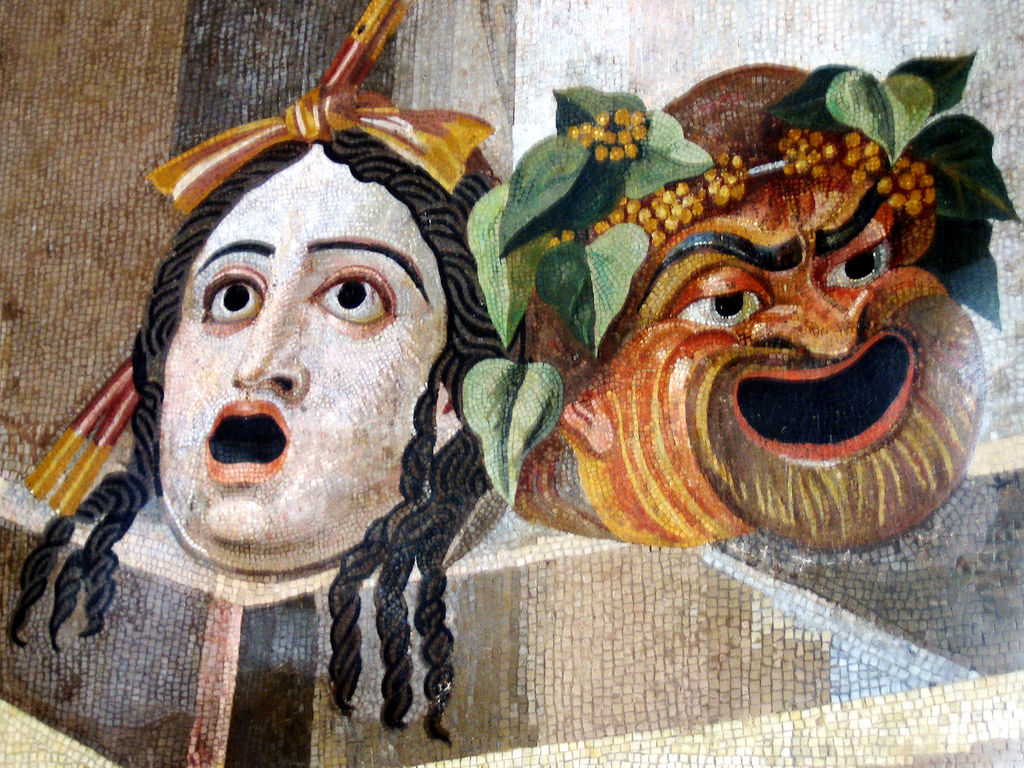
  • THEATRE: I have recently read an article on this topic you Click on the image below and you could read an interesting article that I have recently read on EducaLab.


EDUCALAB BY CNIIE
         PUBLIC DOMAIN


  • CINEMA: Go and ask your local cinemas or near your town whether they are broadcasting films in English, and spend a wonderful morning watching an original version movie.
  • TALES: Tales? Maybe you are wondering why I do not suggest novels or stories for their maturity processes but... Tales are not only addressed at children! They can both read tales on emotions, or create them. Try with my beloved and crazy Dr Seuss, for example.

REFERENCES


Greek theatre masks from https://commons.wikimedia.org/wiki/File:Tragic_comic_masks_-_roman_mosaic.jpg

Wish me good luck!

Miss Bacaicoa

12/25/2016

Oral expression and interaction


Hello, my readers!


Today's topic is focused on oral skills and how to motivate and enhance our students' participation during a speaking activity, whatever type of exercise you may choose: individual speeches, dialogues in couples, small groups, for and against debates, one-to-one with the teacher, etc.

It might seem highly recommendable to create a comfortable atmosphere for our students not to feel embarrassed when using their SL since the very first day. 

In order to guide myself and my readers as well, the following article taken from the British Council website is offered as a stepping stone resource to deal with the most common situations when teaching ESL to teenagers.

IMAGE FROM CREATIVE COMMONS

After the previous reading, I would like to continue developing my TU "Lost in the States" where the oral expression proficiency is covered as a "Giving and asking for directions" set of activities.

To start with, we will review together the most common locations they should already know such as: the cardinal points (North, South, etc.), left and right, prepositions of place (in, on, at, in front of, next to, behind, between, etc.)

Afterwards, we will follow with some instructions: go straight on, turn left/right, pass over, etc. To be honest, the funniest way to practise this topic with lower learners  is by using realia (maps and/or a compass), and also moving around the playground, the corridors, when possible, or the classroom. However, as an alternative, students can draw their own invented cities on a piece of paper or use Google Maps (on their mobile phones).

I have prepared an extra game my students could find on my Evaluation section on the top of my blog so to have fun and study before the oral exam. It was created with Educaplay and I called "How can I get to...?"

Hope you find this post useful and comment it kindly!

Merry Christmas!


Miss Bacaicoa