2/03/2017

WEEK 1 AT EOI ELX


Hello, my readers!

This post will be a summary of my very first day at EOI as a language assistant. I decided to start the day after the Welcome session, February 2nd, and get to know my Rogelio's groups. His schedule planned for Thursdays is going to be the following:

Room 17

1ST YEAR A2 LEVEL (Group 9B) - From 9 am to 10:53 am

1ST YEAR B2 LEVEL (Group 11B) - From 11:10 am to 1 pm

Materials:
All the English students use the textbook by Oxford University Press (OUP) NEW ENGLISH FILE, graded according to their level (beginner, elementary, etc.). Apart from the book, students (ss. from now on) also bought a workbook for extra practice and a small booklet containing the answer key. 

A big poster with a highly visual phonemic chart (International Phonemic Alphabet) mixed with pictures was attached next to the whiteboard because from the very starting day at EOI, ss. are introduced to and aimed at using and recognising how sounds are pronounced.

Classroom management:
Ss. seat freely in tables of 6 people. 

Group 9B:
The teacher introduced me an some of my fellows who were also in the classroom to the ss. Then, the first 10' were dedicated to review some doubts from the previous units (1-6) they had studied (e.g. how to tell the time, auxiliary verbs such as do and to be, or phonics). 

Afterwards, they started Lesson 7 whose topic is "Free Time". I have to say, that even though my tutor is a very enthusiastic professional, I was surprised by and do not totalle agree with the traditional types of activities contained in the textbook, such as matching, fill in the gaps, etc.

Group 11B:
I liked the way ss. in this group introduced themselves to me, they love talking and practising, not worried at all about making mistakes or passing official exams for getting certifications and so, made them feel more free and relax during the lessons.

To start with, all the class checked together some errors on mini-writings they had uploaded to an online platform called "Today's meet", which was totally new for me. The theme was sharing how each of them gets relaxed. In order to fulfill this assignment, they had a few examples you can read on the right.


Also, they had a dialogue as homework but as they had not done it, the teacher decided to ask hem for something new on spot. The task was planned for small teams in which ss. discussed about "Do's and Don'ts of being an English teacher"  for 5 minutes, and then me their pieces of advice. 

The teacher ended the session with 3 different listening activities to reinforce their aural comprehension abilities focused on the linking consonants in short phrases. The first and the second exercises were from the text book (for instance, recognising pick it up, not at all, first of all, in an hour, on our own). The last one was a real First Certificate in English (FCE) sample that I will show you in the photo below:


Roge read carefully the instructions and tips before playing the recording. There were 7 multiple-choice questions (choose A, B, or C). And for next Thursday, they will have to hand in a book review.

Have a nice weekend :)


Miss Bacaicoa


I'M BACK


Hello, my readers!

Last Wednesday I began with my internship at Escuela Oficial de Idiomas (EOI, from now on) in Elche (Alicante, Spain). 

I dare to confess that I was really nervous and overexcited about this new adventure, though I had already taught adults I could have never imagined how this worked as far as the state service. Thus, it was my first time at the EOI and it really exceeded my expectations.

At the hall, my tutor (Rogelio Tarí) received me with a warm welcome and guided me to his classroom (number 17), where some other fellows were seating. 

Firstly, he introduced himself, and summarised how the school works. Then, the centre manager (Ramón Antón) came as well and both together informed us about the possibilities to establish our own schedules for the training period. 

We should finish by April, 7th, having completed a minimum of 100 hours (on-site) and attending meetings (teaching staff and English department). Secondly, Rogelio gave us a guided tour along the centre and introduced us to the concierge.

Finally, we culminated the reception day again with Ramón showing us the EOI website and kindly answering us some doubts.


Miss Bacaicoa

1/13/2017

Be creative: TO BE OR NOT TO BE?


Hello, my readers!


This publication will be the last one before I will start my Master's final exams period, this is why I have the need of spending a three-week holiday apart from my PLE in order to study and I do my best both at work and academically.


I will be back by the first week of February when I will be teaching at [SURPRISE] in Elche, sorry I still cannot share my intership destination, but I promise to keep my readers informed!

I would like to share then, different ways in which routines can vary by adding artistic expressions in the ESL classroom.


  • MUSIC: Ask your students if they can play any instrument and give them the opportunity to share their experiences and bring them to class!
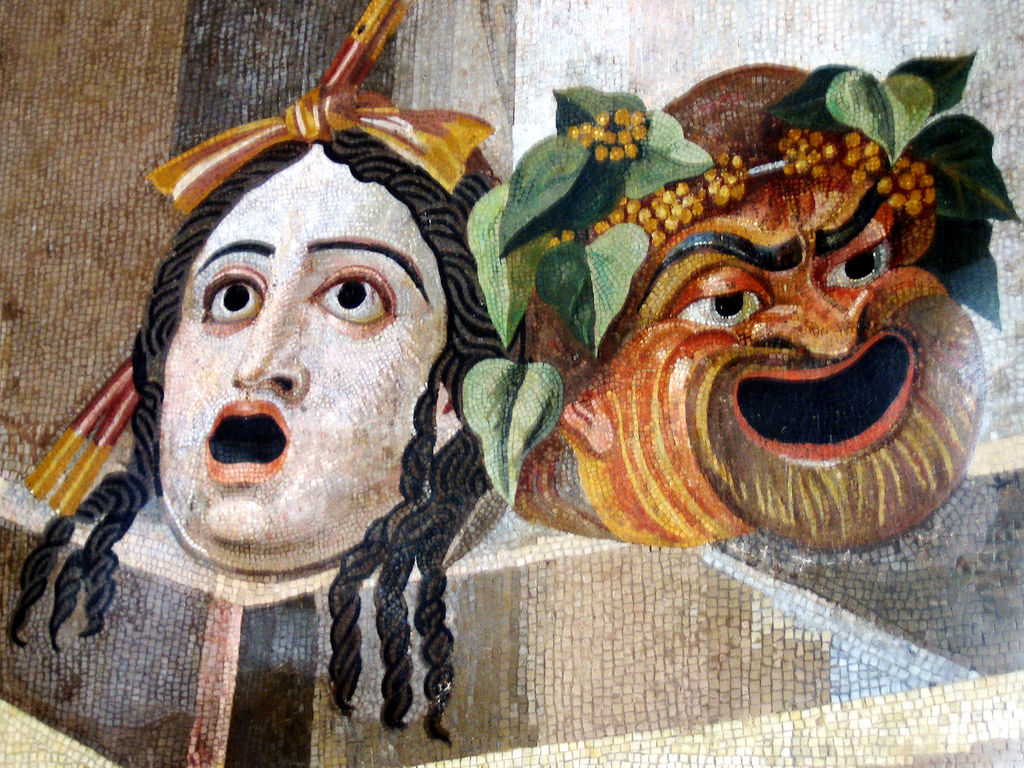
  • THEATRE: I have recently read an article on this topic you Click on the image below and you could read an interesting article that I have recently read on EducaLab.


EDUCALAB BY CNIIE
         PUBLIC DOMAIN


  • CINEMA: Go and ask your local cinemas or near your town whether they are broadcasting films in English, and spend a wonderful morning watching an original version movie.
  • TALES: Tales? Maybe you are wondering why I do not suggest novels or stories for their maturity processes but... Tales are not only addressed at children! They can both read tales on emotions, or create them. Try with my beloved and crazy Dr Seuss, for example.

REFERENCES


Greek theatre masks from https://commons.wikimedia.org/wiki/File:Tragic_comic_masks_-_roman_mosaic.jpg

Wish me good luck!

Miss Bacaicoa

Writing expression and interaction: A DIARY


“A man’s mistakes are his portals of discovery.” James Joyce


Hello, my readers!


Welcome to a new post dedicated to enhance your students' writing skills. As the TU "Lost in the States" is focused on a trip to America, and sometimes when travelling plan do not occur as expected (though you had checked the map, asked the locals, etc.), I thought that writing a diary can be a good manner of keeping record of their "daily adventures and feelings". This will be explained also in class. 


This task contains three core sections: 


  • Include the full date, how’s the weather like, and your exact geographical location (state and village/city) every day on top of your diary page.
  • Describe how your day has been or would have been using the 3rd Conditional as much as possible.
  • Draw a box containing a new idiom and two phrasal verbs learnt each day. You must explain the idiom meaning in your own words, and include the PhVbs within two logical sentences. 

In order to introduce idioms in the ESL classroom, I have designed a dynamic short presentation using the powerful resource called PowToon.


POWTOON
PLEASE CLICK ON THE IMAGE ABOVE,
THIS IS JUST SCREENSHOT


Should you need any further clarification, you could watch a PechaKucha video I have recorded myself. It is available on my YouTube Channel, you can access from my blog following these instructions: Click on the page VIDEOS, and then on the IMAGE you will find there. 


Also, I would be glad to answer your comments or e-mails.

Have a wonderful day you all!


Mrs Bacaicoa


Reading comprehension skills: TRAVEL GUIDES RESEARCH


Hello, my readers! 


The core purpose of this publication is to practise the students' reading skills as well as giving them the needed standards in order to investigate on a concrete topic (TRAVELING TO THE STATES) using the Internet: 


Afterwards, your students will be able to combine their abilities to perform their own project in public: the performance of an oral exposition focusing on the one of the areas of research proposed by the teacher or their own elections:

  • Climate
  • Geography (land area, oceans, mountains, etc.)
  • History 
  • Inhabitants (number, races, religions, etc,)
  • Languages spoken
  • Time zones

TIPS for Special Educational Needs: 
  • Lower readers may need adapted texts or/and extra recommendations/guidelines as far as the information they have to find (FIRST..., THEN...)
  • The opportunity of choosing their areas of research about the country will benefit your ASD students, who will be encouraged to participate with their favourite topics.


Miss Bacaicoa


Grammar: WISHES AND REGRETS


Hello, my readers!


Yes, indeed! As it can be guessed from its title, this post today will be about grammar and not boring at all! 

I think that there is a spread missconception of learning and teaching SL/ FL grammar around the world. Some teachers and students seem to  be completely obssesed about it others, on the contrary extremely avoid it in order to creative communicative atmospheres. But? Is there an average point?

In my opinion, there must be and if teachers are not able to find them, they must create it. 

Example of a grammar lesson plan:
http://learnenglishteens.britishcouncil.org/grammar-vocabulary/grammar-videos/third-conditional 

😞 DISADVANTAGES: artificial language  is employed in videos and recordings, this bores teenagers to tears!

😊ADVANTAGES: already prepared for busy teachers inclusding three types of different classic activities to reinforce the grammar point taught.


TIP: You can use hotpotates to check their understanding at home! And so, do not waste your scarce time in class with it.


Miss Bacaicoa

1/02/2017

Culture, history and traditions: THANKSGIVING


Hello, my readers!

On my contribution today, I would like to make you wonder about culture and all its implications within the SL classroom. From now on, I will refer both to high school and adult learners of English. It is cold this winter, please take a coffee and seat before meditating...


Are HISTORY and TRADITIONS important when TESL? What do we understand for CULTURE? Does it apply for one and only single COUNTRY? If so, WHERE should we choose it from?


So to calm down my readers after these universal questions, I have delicately done some reasearch and chosen the paper so called "Teaching culture in the 21st century language classroom". It was published by University of Nebraska and defends that:

"Research on teaching culture has shown that language and culture are closely related and are best acquired together. [...] The acquisition of a second language […] is also the acquisition of a second culture.” 


This being so, trying to avoid culture in our ESL would be a catastrophe that will damage our students' perception of the world and enhance their rejection towards other countries. 

Undoubtedly, teaching beyond language structures seems for me a engaging opportunity to "open wide" their mind scopes and appreciate different cultures whenever you have the opportunity, as a teacher, to keep your students in contact to foreign institutions or schools (English speakers, it does not really matter if you decide to communicate with students in Colombia who learn ESL or native English speakers from Scotland). 

Good real examples I have experimented myself in the ESL classroom are:
  •  a videoconference session using the platform Skype to discuss about Hallowe'en differences between America and Europe; 
  • sending e-mails / letters  to ask for recommendations for planning a trip or a recipe for preparing a British national meal.


Focusing on the "Lost in the States", I have created with the tool WordClouds a highly visual word map containing some of the essential vocabulary to be employed at the end of your Thanksgiving lesson in order to retell the historical events. However, this idea can be applied for several purposes such as: 
  • a table of contents for introducing the involved characters and locations, you can establish a concrete order, in our case I did not choose it on purpose;
  • a study helper;
  • a tool for brainstorming during debates, showing the guide lines to follow;
  • an opportunity to come upon synonyms and antonyms on online dictionaries as Theasaurus;
  • teach them to generate their own "word clouds" easily not just with the previous tool mentioned (WordCloud) but also with the ones I have considered the best to handle by beginners: Wordle, and WordItOut.
  • There are plenty of objectives that could be achieved from them, do not hesitate to contact me or comment this post if you can name some more!


CREATED BY SANDRA BACAICOA

References
  • Dema, Oxana and Moeller, Aleidine Kramer, "Teaching culture in the 21st century language classroom" (2012). Faculty Publications: Department of Teaching, Learning and Teacher Education. Paper 181. 

My best New Year's wishes to you all!


Miss Bacaicoa


12/25/2016

Oral expression and interaction


Hello, my readers!


Today's topic is focused on oral skills and how to motivate and enhance our students' participation during a speaking activity, whatever type of exercise you may choose: individual speeches, dialogues in couples, small groups, for and against debates, one-to-one with the teacher, etc.

It might seem highly recommendable to create a comfortable atmosphere for our students not to feel embarrassed when using their SL since the very first day. 

In order to guide myself and my readers as well, the following article taken from the British Council website is offered as a stepping stone resource to deal with the most common situations when teaching ESL to teenagers.

IMAGE FROM CREATIVE COMMONS

After the previous reading, I would like to continue developing my TU "Lost in the States" where the oral expression proficiency is covered as a "Giving and asking for directions" set of activities.

To start with, we will review together the most common locations they should already know such as: the cardinal points (North, South, etc.), left and right, prepositions of place (in, on, at, in front of, next to, behind, between, etc.)

Afterwards, we will follow with some instructions: go straight on, turn left/right, pass over, etc. To be honest, the funniest way to practise this topic with lower learners  is by using realia (maps and/or a compass), and also moving around the playground, the corridors, when possible, or the classroom. However, as an alternative, students can draw their own invented cities on a piece of paper or use Google Maps (on their mobile phones).

I have prepared an extra game my students could find on my Evaluation section on the top of my blog so to have fun and study before the oral exam. It was created with Educaplay and I called "How can I get to...?"

Hope you find this post useful and comment it kindly!

Merry Christmas!


Miss Bacaicoa


12/20/2016

Listening comprehension skills: RECOGNIZING AMERICAN SPELLINGS


Hello, my readers!

Today I will help you both teachers and students to differentiate and detect the most broadly used English accents: the British, also known Received Pronunciation (RP), and the American (refering to the USA). My core objective is to neutralize the existing myths and prejudices against the usage any accent or spelling not coming from the Great Britain. 

Why is my worry for this controversy so huge and deep as to motivate this publication? 

The answer is simple: how I was taught English in Spain from school to high-school. 

If you click on the following link
https://en.oxforddictionaries.com/spelling/british-and-spelling there is an interesting summary of the main characteristics and also a brief video commenting them, even though maybe for slower students it is recorded a little bit fast, you can deeply read the text. 


My proposal to work out in the classroom (taking into account my TU proposal) is to go on a "word hunting" using a piece of news or the lyrics from a song. This activity will consist on highlighting or marking in different colours the different spellings you are able to transform into the opposite accent of the two studied. 

I will be glad to read your opinions, tell me if it works to you on a comment! 💬 


Remember that spelling abbreviations in dictionaries appear normally like you will read below: 


BY SANDRA BACAICOA


But, if there is a difference in a word rather than spelling between one accent and another one, there will be also marked in dictionaries. That is to say, if in BrE they use "autumn", its synoynm in NAmE "fall" will be also written in brackets) in the dictionary entry.

I consider that it is important to get your students face to paper dictionaries to enlarge their knowledge and open their minds, not only Beyoncé speaks English! Being aware of differences will make teenagers understand better prompts in activities, questions within a debate, videos you watch together, films at the cinema, and so on and so forth.

My recommendation for 2º BACH. students at home is watching and listening to TV series from different countries in order to enjoy real accents rather than boring listenings from text books. Here, I can offer you some examples your young students could fall in love with:


  • Modern Family (NAmE/US) - Comedy
  • Arrow (NAmE/US) - Superheroes, action, crime, mystery
  • Sherlock (BrE) - Mystery
  • Girls On Top (IndE) - Romance, fiction
  • Degrassi: The Next Generation (CanE) - Teen drama


Afterwards, they can weekly or monthly talk about them during the last ten minutes of a session, sharing their opinions with their classmates.

Hope you have enjoyed and learnt from this post!

Soon again with you,


Miss Bacaicoa

12/07/2016

SUGGESTIONS FOR INTRODUCING A NEW UNIT


Hello my readers, 


Today I am glad to introduce you my Teaching Unit  "Lost in the States" throughout a dashboard I have elaborated myself using Piktochart, a powerful tool for creating graphics and having a great success without investing a large period of time. Piktochart offers a wide variety of templates so you can complete them with your information and make it visually attractive to the audience! 

This "impact" created on the students, could have been also achieved with music, or a short video, but I prefered an image to start with. If we look closer, not just taking the first impression, this poster can lead to a brainstorming or a debate, in other words, valuable opportunities both for the students, to share anecdotes, and for the teachers to get to know their students previous knowledge on the contents.

Moreover, I am very keen on bringing realia (authentic daily objects) to the classroom as to relate their lives to the topics we are dealing with. 

Applying now the two previous suggestions to my teaching unit, we could start dividing our students into small groups of five and challenging them to discover what we will talk a about for the next weeks. As teachers, we can project the image on a big screen (as far as the school owns a projector) or print it big size and pass it around or post it on the walls/doors. For those with visual difficulties, we could also play the USA nation hymn at low volumn, let them touch a flag with many stars in 3D, or even a relieve map! And remember always to sit them in the first rows.

TIP: During the first session of every unit, misspronunciation may happen between the students, do not worry about it! It would not help them repeating as machines several times their mistakes. Let their speaking turns flow.

I really hope this post has being helpful! 
Looking forward to keeping in touch.

Mrs Bacaicoa

CREATED BY SANDRA BACAICOA